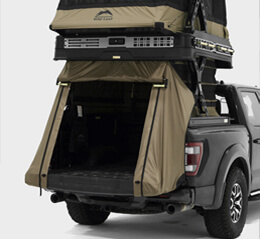
XIAMEN, FUJIAN , CHINA, July 3, 2026 /EINPresswire.com/ — In today’s rapidly evolving outdoor recreation industry, the demand for more intelligent, efficient, and integrated camping solutions is reshaping how travelers engage with pickup-based mobility systems. As outdoor lifestyles shift toward flexibility and instant deployment, a clear technological and experiential divide is emerging between next-generation integrated systems such as WingmanX and traditional truck camping accessories.
This press release provides a comprehensive comparative analysis of WingmanX versus conventional truck camping accessories, focusing on two critical dimensions: system integration and user experience. It also highlights how Wild Land, with over 23 years of rooftop tent innovation, continues to redefine outdoor exploration through engineering philosophy rooted in durability, simplicity, and connection with nature.
The Evolution of Truck Camping: From Accessories to Integrated Systems
Traditional truck camping accessories have long served outdoor users through modular add-ons such as rooftop tents, canopy shells, drawer systems, and slide-in campers. These solutions, while functional, are often developed as independent components rather than unified systems.
In contrast, WingmanX represents a shift toward fully integrated truck camping architecture, where mobility, shelter, storage, and usability are engineered as a single coordinated ecosystem.
This evolution reflects Wild Land’s core philosophy: outdoor equipment should not merely support exploration—it should remove barriers between people and nature entirely.
1. Integration: Fragmented Accessories vs Unified System Architecture
Conventional Truck Camping Accessories
Traditional truck camping setups are typically composed of multiple separate components. Users often combine:
Roof racks or rooftop tents
Separate storage drawers or boxes
Fixed canopy or shell structures
Portable cooking or sleeping gear
While flexible in theory, this fragmented approach introduces several limitations:
Lack of system-wide coordination between components
Increased setup complexity due to multiple independent installations
Inefficient space utilization caused by non-standardized design
Compatibility issues between different aftermarket brands
Higher cumulative weight and structural redundancy
As a result, users often spend more time assembling and managing equipment than actually experiencing the outdoors.
WingmanX Integrated System
WingmanX addresses these challenges by replacing fragmentation with system-level integration. Instead of treating truck camping as a collection of accessories, it functions as a unified platform designed from the ground up.
Key integration advantages include:
Unified mechanical structure combining shelter, storage, and deployment systems
Optimized spatial engineering for maximum usability within truck bed constraints
Reduced reliance on external add-ons or aftermarket customization
Seamless compatibility across supported pickup platforms
Intelligent design synchronization between all functional modules
This integrated approach eliminates redundant setup steps and ensures that every component works in harmony with the others.
Wild Land’s engineering philosophy is central here: “Pure functionality enabling deeper connection.” Integration is not about adding complexity—it is about removing it.
2. Setup Efficiency and Deployment Logic
Conventional Systems: Multi-Step Assembly Process
Traditional truck camping accessories often require layered setup procedures. For example, a typical camping configuration may involve:
1.Installing or unfolding rooftop tents
2.Setting up interior storage systems
3.Organizing loose camping gear
4.Adjusting canopy or tailgate access
5.Securing weather protection layers manually
This process can take anywhere from 20 minutes to over an hour depending on experience and environmental conditions. In adverse weather or nighttime scenarios, setup complexity increases significantly.
WingmanX: Rapid Deployment Engineering
WingmanX introduces a streamlined deployment architecture designed to minimize setup friction. Its integrated system enables users to transition from driving to camping in a significantly reduced timeframe.
Core advantages include:
Simplified activation process through integrated mechanical design
Reduced manual handling requirements
Pre-configured structural alignment between components
Optimized sequence of deployment actions
This ensures that users spend less time preparing and more time engaging with the environment.
In Wild Land’s design philosophy, this is essential: quick setup is not a convenience—it is a gateway to spontaneity and exploration.
3. User Experience: Task Management vs Seamless Living
Conventional Accessories: Task-Oriented Experience
Traditional systems often create a “task-based” camping experience. Users must:
Assemble individual components before use
Manage multiple storage and setup steps
Adapt to non-standardized configurations
Troubleshoot compatibility or alignment issues
This results in a segmented experience where camping feels like a series of logistical tasks rather than a seamless lifestyle transition.
While experienced users may adapt to these systems, beginners often face a steep learning curve and reduced spontaneity.
WingmanX: Experience-Centered Design
WingmanX is designed around a fundamentally different principle: eliminate operational friction to enhance experiential immersion.
The user experience is characterized by:
Intuitive system operation requiring minimal learning curve
Unified interface between storage, shelter, and mobility functions
Rapid transition from transport mode to living space
Reduced physical effort during setup and breakdown
Consistent performance across different environmental conditions
This creates a fluid experience where users can focus on exploration rather than preparation.
Wild Land’s philosophy reinforces this design direction: “Quick setup, smart details, and all-weather protection are not conveniences—they are enablers of connection with nature.”
4. Durability and System Reliability
Conventional Accessories: Component-Based Durability
In traditional setups, durability is often evaluated at the component level. Each accessory—tent, canopy, storage unit—has its own structural integrity. However, system-wide durability can vary depending on:
Brand compatibility
Installation quality
Maintenance consistency
Environmental exposure differences between components
This fragmented durability model may lead to uneven performance over time.
WingmanX: System-Level Structural Integrity
WingmanX approaches durability from a holistic perspective. Instead of evaluating individual components independently, the system is engineered as a unified structural ecosystem.
This results in:
Balanced load distribution across the entire platform
Reduced mechanical stress concentration points
Enhanced weather resistance through integrated sealing systems
Consistent performance under dynamic driving conditions
Durability is not treated as isolated strength—it is designed as a coordinated system behavior.
This reflects Wild Land’s broader philosophy: durability is a testament to thoughtful exploration, not just material strength.
5. Market Adaptability: Static Customization vs Evolving System Design
Conventional Accessories: Static Configuration Model
Traditional truck camping accessories often rely on static configurations. Once installed, systems are difficult to modify without replacing individual components.
This leads to:
Limited adaptability to changing user needs
High upgrade cost when technology evolves
Reduced scalability across different travel styles
Dependence on aftermarket ecosystem fragmentation
While customization is possible, it is often complex and costly.
WingmanX: Adaptive System Evolution
WingmanX is designed as a continuously evolving platform. Its architecture supports:
Modular upgrades based on traveler feedback
Compatibility across different usage scenarios
Annual design refinements driven by field data
Scalable configurations for different expedition durations
Wild Land’s development model is deeply rooted in continuous dialogue with outdoor culture. This ensures that WingmanX evolves alongside user behavior rather than remaining static.
6. Availability and Real-World Usability
Unlike many traditional systems that require long customization cycles, Wild Land ensures that popular WingmanX models are readily available in stock.
This reduces the gap between intention and execution:
No long production delays
Immediate readiness for deployment
Faster transition from purchase to outdoor use
This availability strategy reinforces Wild Land’s commitment to ensuring that “your journey begins the moment the call of the wild ignites your spirit.”
Conclusion: From Fragmentation to Integration, from Setup to Experience
The comparison between WingmanX and conventional truck camping accessories reveals a clear industry transformation.
Traditional systems remain valuable for users seeking modular customization and component-level flexibility. However, they are increasingly constrained by fragmented integration, longer setup times, and limited system cohesion.
WingmanX represents a new direction: fully integrated, experience-driven outdoor mobility systems designed to simplify complexity and enhance human connection with nature.
Built on 23+ years of rooftop tent expertise, Wild Land continues to fuse field insights with visionary engineering. Every innovation reflects a commitment not only to functional excellence, but also to a deeper philosophy of exploration.
Beyond gear, Wild Land provides curated guidance, unwavering support, and a design philosophy rooted in outdoor heritage—ensuring that every expedition expands both territory and perspective.
For more information, please visit:
https://www.iwildland.com/
WildLand International Inc.
WildLand International Inc.
+ +86-592-3133399
sales@iwildland.com
Legal Disclaimer:
EIN Presswire provides this news content “as is” without warranty of any kind. We do not accept any responsibility or liability
for the accuracy, content, images, videos, licenses, completeness, legality, or reliability of the information contained in this
article. If you have any complaints or copyright issues related to this article, kindly contact the author above.

Media gallery